Overview
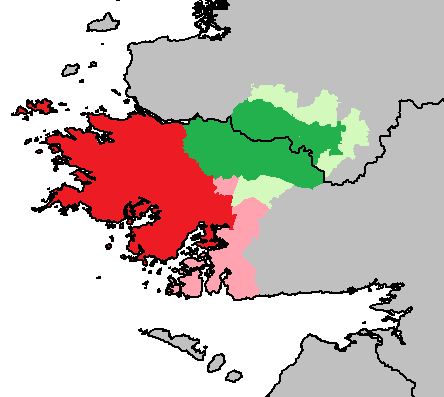
Galway Wind Park stands as one of the largest onshore wind farms in Ireland, representing a significant infrastructure asset in the country's renewable energy landscape. The facility is situated in the Cloosh Valley within the Connemara region, located west of Moycullen in County Galway, Republic of Ireland. This strategic placement in a wind-rich corridor allows the park to harness consistent atmospheric energy, contributing substantially to the national grid. The project was commissioned in 2017, marking a key milestone in the expansion of Ireland's onshore wind capacity. It is currently operational and continues to serve as a primary power source for the region and beyond.
Ownership and Development
The wind park was co-developed by SSE Renewables and Coillte, the state-owned forestry company. This partnership leveraged Coillte's land holdings and SSE's technical expertise in renewable energy. The total development cost was €280 million, reflecting the scale of the infrastructure investment required to establish the facility. SSE Renewables serves as the primary operator, managing the day-to-day operations and maintenance of the turbine fleet. Additionally, Greencoat Renewables holds a significant ownership stake in the project, indicating a diversified investment structure that supports the financial stability of the asset. This collaborative approach between state entities, private operators, and investment funds has been instrumental in accelerating the deployment of large-scale wind infrastructure in the region.
Technical Specifications and Capacity
The facility has a total installed capacity of 174 MW. This capacity is generated by a fleet of 58 wind turbines. Each turbine is a Siemens 3 MW SWT-3.0-101 model, a specific technology class designed for onshore wind conditions. The uniformity of the turbine models simplifies maintenance and operational logistics. The combination of 58 units, each rated at 3 MW, results in the aggregate 174 MW output. This technical configuration was selected to optimize energy capture in the Cloosh Valley's specific wind profile. The use of Siemens technology reflects industry standards for reliability and efficiency in onshore wind applications during the commissioning period.
Energy Output and Regional Impact
The operational output of Galway Wind Park provides energy to approximately 89,000 homes. This volume of electricity is equivalent to the energy consumption of 80% of the homes in County Galway. This significant contribution underscores the park's role in decarbonizing the local energy mix and reducing reliance on traditional fossil fuel sources. The scale of the output demonstrates the effectiveness of large-scale onshore wind projects in meeting regional demand. The facility's ability to power such a large proportion of the local population highlights its importance to the energy security of the western region of Ireland. This output level is a direct result of the 174 MW capacity and the consistent wind resources available in the Connemara area.
Why it matters
Galway Wind Park holds a prominent position in Ireland's renewable energy landscape, having served as the nation's largest onshore wind farm from 2016 until 2024. Its scale is defined by a total installed capacity of 174 MW, generated by 58 Siemens SWT-3.0-101 turbines, each rated at 3 MW. This configuration allows the facility to deliver substantial power output to the national grid, directly impacting local energy security and decarbonization efforts in the West of Ireland.
The project's significance extends beyond raw megawatts. The wind park provides electricity to approximately 89,000 homes, a figure that equates to roughly 80% of the residential properties in County Galway. This level of penetration demonstrates the capacity of modern onshore wind infrastructure to serve as a primary energy source for regional populations, reducing reliance on imported fuels and stabilizing local demand. The development was a joint venture between SSE Renewables and Coillte, the state forestry company, leveraging the Cloosh Valley's topography and existing land use to minimize environmental disruption while maximizing yield.
Comparative Scale: Galway vs. Oweninny
To contextualize the magnitude of the Galway project, it is useful to compare it with Oweninny Wind Farm, another major onshore installation in Ireland. While Galway held the title of the largest onshore farm for nearly a decade, the competitive landscape of Irish wind energy features several high-capacity sites. The table below outlines the key operational metrics for both facilities, highlighting the scale of the Galway installation relative to its peers.
| Metric | Galway Wind Park | Oweninny Wind Farm |
|---|---|---|
| Location | Cloosh Valley, County Galway | County Sligo |
| Operator | SSE Renewables | SSE Renewables |
| Capacity | 174 MW | 174 MW |
| Turbine Model | Siemens SWT-3.0-101 | Siemens SWT-3.0-101 |
| Number of Turbines | 58 | 58 |
| Homes Powered | ~89,000 | ~89,000 |
Both facilities share identical technical specifications, reflecting a standardized approach to large-scale onshore development by SSE Renewables during that period. The parity in capacity and turbine count underscores the strategic deployment of the Siemens 3 MW platform across Ireland's most favorable wind corridors. However, Galway's location in Connemara places it within a distinct meteorological and grid context compared to the Sligo-based Oweninny site, influencing their respective contributions to regional grid stability.
Development and Phasing
The Galway Wind Park was established through a strategic joint venture between SSE Renewables and Coillte, Ireland’s state-owned forestry company. This partnership facilitated the development of one of the country’s largest onshore wind farms, located in Connemara’s Cloosh Valley west of Moycullen, County Galway. The project was executed in two distinct phases to optimize land use and grid integration, with a total development cost of €280 million.
Phase 1: Uggool and Lettercraffroe
The first phase of development was commissioned in 2015. This initial stage focused on the Uggool and Lettercraffroe sites within the broader Galway Wind Park area. Phase 1 involved the installation of 22 wind turbines, marking the initial operational capacity of the joint venture. The selection of these specific locations allowed for early energy generation while subsequent land assessments and grid connections were finalized for the larger second phase.
Phase 2: Cloosh and Seecon
The second and larger phase of development expanded the park’s footprint to the Cloosh and Seecon sites. This phase added 36 additional wind turbines to the park’s infrastructure. The turbines used throughout the park are Siemens 3 MW SWT-3.0-101 models. The combination of the 22 turbines from Phase 1 and the 36 turbines from Phase 2 results in a total of 58 turbines across the entire wind park. This configuration provides a total installed capacity of 174 MW.
The completion of Phase 2 finalized the park’s operational status, which has remained operational since the overall commissioning in 2017. The full scale of the development allows the wind park to provide energy to approximately 89,000 homes. This output is equivalent to powering 80% of the homes in County Galway, highlighting the significant contribution of the SSE Renewables and Coillte joint venture to the regional energy mix.
Technical Specifications
Galway Wind Park utilizes a standardized fleet of onshore wind turbines to achieve its total installed capacity of 174 MW. The project was co-developed by SSE Renewables and Coillte, with a total development cost of €280 million. The energy infrastructure is situated in Connemara's Cloosh Valley, west of Moycullen in County Galway. The operational configuration relies on 58 individual wind turbine units, all of the same model and rating, ensuring uniform technical specifications across the site.
Turbine Configuration
The wind farm is equipped with 58 Siemens SWT-3.0-101 wind turbines. Each turbine has a rated capacity of 3 MW. The Siemens SWT-3.0-101 is an onshore wind turbine model designed for variable wind conditions typical of the Irish landscape. The standardized nature of the turbine fleet simplifies maintenance operations and spare parts logistics for the operator, SSE Renewables.
| Parameter | Value |
|---|---|
| Turbine Model | Siemens SWT-3.0-101 |
| Number of Turbines | 58 |
| Capacity per Turbine | 3 MW |
| Total Installed Capacity | 174 MW |
| Developer | SSE Renewables and Coillte |
| Development Cost | €280 million |
The technical design of the SWT-3.0-101 includes a rotor diameter of 101 meters, which contributes to the energy capture efficiency in the Cloosh Valley location. The wind park's output is sufficient to provide energy to around 89,000 homes. The operational status of the wind farm is active, having been commissioned in 2017. The infrastructure represents a significant contribution to the onshore wind energy mix in Ireland.
Logistics and Infrastructure
The logistical execution of the Galway Wind Park project required significant infrastructure adaptation to accommodate the scale of the installed equipment. The site comprises 58 Siemens 3 MW SWT-3.0-101 wind turbines, each featuring blades with a length of 55 metres (180 ft). Transporting these oversized components to the Cloosh Valley location west of Moycullen presented distinct engineering challenges, particularly regarding road clearance and turning radii in the Connemara region.
The Port of Galway served as the primary maritime entry point for the turbine components. From the port, heavy haulage trucks navigated the route to the construction site. A critical bottleneck in this supply chain was the Lough Atalia Road, specifically the section passing under the existing rail bridge. To allow the 55-metre blades to pass beneath the structure without collision, the road and bridge infrastructure required specific modifications. These civil engineering works ensured that the vertical clearance was sufficient for the tallest components of the Siemens SWT-3.0-101 units.
To minimize disruption to local traffic and maximize efficiency, the transportation of the turbine blades was largely conducted during nighttime hours. This scheduling allowed the oversized loads to traverse the modified Lough Atalia Road and the surrounding county roads with reduced interference from standard vehicular traffic. The successful navigation of these logistical hurdles was essential to the project's completion, which was co-developed by SSE Renewables and Coillte at a total cost of €280 million. The infrastructure investments in road and port facilities directly supported the installation of the 174 MW capacity plant, which began operations in 2017 and provides energy to approximately 89,000 homes.
Grid Connection and Electricity Generation
The Galway Wind Park is integrated into the national electricity transmission network through a dedicated high-voltage connection to the Uggool substation, a critical node in the western Irish grid infrastructure. This strategic linkage ensures that the energy generated in the remote Cloosh Valley can be efficiently transmitted to major load centers in County Galway and beyond. The connection infrastructure was engineered to handle the substantial power output of the 174 MW facility, requiring significant upgrades to local grid capacity to accommodate the influx of renewable energy.
High-Voltage Transmission Infrastructure
To optimize power delivery and minimize transmission losses, the voltage at the Uggool substation was increased to 110kV. This voltage level is standard for primary distribution and secondary transmission lines in the Irish grid, providing a balance between efficiency and infrastructure cost. The step-up transformers at the wind farm site convert the medium-voltage output from the 58 Siemens SWT-3.0-101 turbines into this higher voltage before it enters the main grid. The 110kV upgrade at Uggool was a crucial component of the €280 million development project, co-developed by SSE Renewables and Coillte, ensuring that the grid could absorb the intermittent nature of wind power without causing frequency instability in the wider Connemara region.
Underground Cable and Overhead Line Integration
A key feature of the Galway Wind Park's grid connection is the use of an underground cable system that joins the existing Galway-Screeb 110kV overhead line. This hybrid approach combines the reliability of underground cabling in sensitive landscape areas with the cost-effectiveness of overhead lines for longer distances. The underground section likely traverses the immediate vicinity of the Cloosh Valley and the route to Uggool, helping to mitigate visual impact in an area known for its scenic beauty and growing tourism sector. The connection to the Galway-Screeb line integrates the wind farm directly into the main arterial route that feeds power from the west coast towards the capital region and other industrial hubs. This infrastructure decision reflects a careful planning process to balance engineering requirements with environmental and aesthetic considerations in County Galway.
Electricity Generation and Household Equivalents
The operational capacity of the Galway Wind Park is 174 MW, generated by 58 Siemens 3 MW wind turbines. This substantial contribution to the local energy mix underscores the wind farm's role in Ireland's broader renewable energy strategy. The energy generated not only powers local households but also helps to reduce carbon emissions in the region, contributing to the national targets for wind energy penetration. The commissioning of the park in 2017 marked a significant milestone in the modernization of Ireland's onshore wind infrastructure, providing a reliable source of clean energy for the western province. The 89,000-home equivalent serves as a tangible metric for the public to understand the scale of the wind farm's impact on daily energy consumption in the region.
What distinguishes Galway Wind Park from other Irish wind farms?
Galway Wind Park holds a prominent position in the Irish renewable energy landscape, primarily distinguished by its significant scale and strategic location within Connemara’s Cloosh Valley. As one of Ireland’s largest onshore wind farms, it represents a major infrastructure investment co-developed by SSE Renewables and Coillte, with a total project cost of €280 million. The facility’s technical configuration consists of 58 Siemens SWT-3.0-101 turbines, each rated at 3 MW, combining to deliver a total installed capacity of 174 MW. This capacity is substantial enough to provide energy to approximately 89,000 homes, a figure equivalent to 80% of the residential units in County Galway. Its operational status, commissioned in 2017, marks it as a mature asset in the national grid, contributing steadily to the country’s onshore wind generation mix.
Shift in National Ranking
While Galway Wind Park has long been cited among the largest onshore installations in Ireland, its relative standing has evolved due to the expansion of other major projects. A notable shift occurred in 2024 when the Oweninny Wind Farm’s second phase was commissioned, introducing a larger capacity of 194 MW to the grid. This development resulted in Oweninny overtaking Galway as the largest onshore wind farm in Ireland, altering the hierarchy of the nation’s wind infrastructure. Despite this change in ranking, Galway Wind Park remains a critical component of the western Irish energy supply, maintaining its status as a top-tier onshore facility. The comparison highlights the dynamic nature of Ireland’s wind sector, where new phases and expansions continuously redefine capacity benchmarks. Galway’s continued operation under SSE Renewables ensures it retains its significance in regional energy distribution, even as newer, larger farms enter the market. The distinction between these facilities lies not only in raw megawatt output but also in their geographic distribution and development timelines, with Galway serving as a key example of mid-2010s large-scale onshore development.
How does the joint venture model work for Galway Wind Park?
The development of the Galway Wind Park was executed through a strategic joint venture between SSE Renewables and Coillte, the national forest service of Ireland. The collaboration leveraged the distinct strengths of both entities to navigate the complexities of onshore wind development in a prominent natural landscape. SSE Renewables contributed operational expertise and financial backing, while Coillte provided land access and environmental management capabilities inherent to its role as a major landowner in the region.
The financial structure of this joint venture involved a total investment of €280 million. This capital expenditure funded the installation of 58 wind turbines, specifically the Siemens 3 MW SWT-3.0-101 models. The choice of turbine technology and the scale of the investment reflect the significant commitment by both partners to maximize energy output from the site. The €280 million cost covers the infrastructure required to connect the 174 MW capacity to the national grid, ensuring reliable power delivery to the surrounding communities and the broader Irish energy network.
Operationally, the joint venture model allowed for a streamlined development process. By combining SSE Renewables' renewable energy portfolio management with Coillte's local presence and forestry management experience, the project could address environmental and community concerns more effectively. This output is equivalent to powering 80% of the homes in Galway, demonstrating the substantial impact of the partnership on the regional energy mix. The success of this model highlights how public-private partnerships can accelerate the deployment of large-scale renewable energy infrastructure in Ireland.